
“Steam cleaning” sounds like one universal process, but consumers use the term for different equipment and surfaces. The old version of this article promised that steam kills germs and bacteria, described carpet and upholstery as though they were interchangeable, and omitted Xtreme Cleans’ restricted-fabric list. The accurate explanation is narrower: Xtreme Cleans uses truck-mounted hot water extraction for carpet and cleans accepted synthetic upholstery after inspection and testing.
This guide explains what the marketing term usually means, how solution and soil are recovered, why carpet and furniture need separate decisions, what 2–4 hour drying guidance means, and why routine cleaning is not an antimicrobial claim. It does not advertise leather, wool, linen, silk, velvet, viscose, or rayon cleaning.
What “Steam Cleaning” Usually Means for Carpet
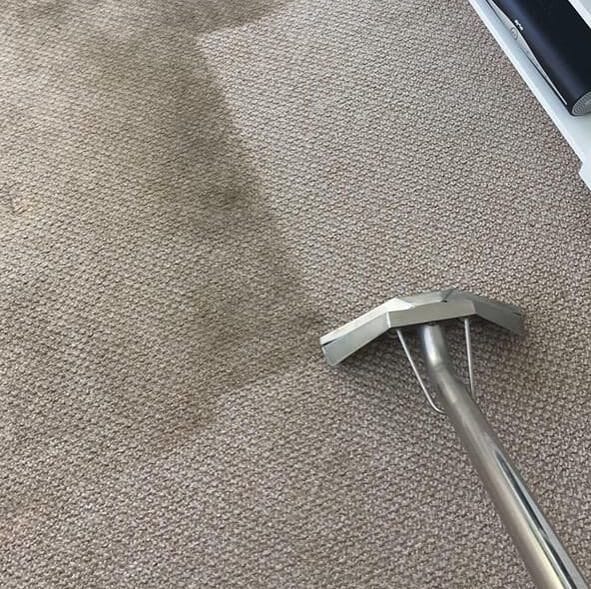
Professional carpet “steam cleaning” usually refers to hot water extraction rather than a cloud of dry steam passing over the pile. The cleaner applies suitable chemistry and water, agitates or treats where required, and uses vacuum recovery to extract suspended soil, solution, and moisture. The temperature is one process variable; recovery, chemistry, dwell time, agitation, rinse quality, fiber, and technician decisions also matter.
Ask the provider to describe the actual system: truck-mounted or portable, pre-vacuum expectations, treatment, agitation, extraction, rinse, dry strokes, and air movement. A provider should be able to explain how much moisture is recovered and what the customer needs to do during drying without relying on a vague “deep steam” label.
Need a straight answer about your carpet?
Text a photo and the relevant label or room details to (410) 819-2223, or call to discuss what is inside the verified service scope.
The Carpet Process, Step by Step
- Inspection: identify carpet construction, soil, spots, damage, access, prior products, furniture and moisture concerns.
- Dry-soil planning: determine what vacuuming or pile preparation is needed before wet work.
- Preconditioning: apply chemistry suited to the accepted carpet and soil rather than a one-product-fits-all claim.
- Agitation and dwell: allow controlled contact and distribution where appropriate.
- Extraction and rinse: recover suspended material, solution and moisture with overlapping passes.
- Dry strokes and airflow: remove additional moisture and position air movement for the normal drying plan.
- Final review: distinguish removed soil from permanent wear, dye loss, damage or a backing/pad issue.
Xtreme Cleans works to the IICRC S100 professional carpet-cleaning standard but does not hold an IICRC certification. The Carpet and Rug Institute’s standards also place extraction inside a broader maintenance system. Standards guide process; they do not guarantee every spot or authorize a credential the company does not hold.
Why Extraction Quality Is More Than Water Temperature
Temperature can help suitable chemistry work, but it is not a standalone score for cleaning quality. A responsible process balances product directions, carpet compatibility, soil type, controlled application, agitation, rinse quality, vacuum recovery, and repeated dry passes. Excess solution or poor recovery can leave residue and extend drying even when the machine produces very hot water. Ask how the whole process is controlled instead of comparing providers by a temperature claim alone.
Dry soil removal matters too. Sand, grit, hair, and other particulate should be addressed before unnecessary moisture turns them into a harder mixture to recover. After extraction, the technician should review traffic lanes and spots under consistent light, explain what changed, identify permanent wear or dye damage, and leave practical drying instructions. That sequence is more informative than promising that “steam” automatically resets every carpet to a new condition.
Upholstery Is Not Just Small Carpet
Furniture may contain face fabric, backing, decking, piping, thread, adhesive, interior markings, foam, batting, feathers, wood, metal, and prior protector. Moisture can move dye or internal material toward the surface. A method suitable for installed synthetic carpet cannot be transferred automatically to an unknown couch.
Xtreme Cleans accepts synthetic upholstery only: polyester, microfiber, olefin, nylon, and many synthetic blends after inspection. It does not clean leather or faux leather, wool, linen, silk, velvet, viscose, or rayon. The manufacturer label and cleaning code are reviewed, then an inconspicuous test helps check color and texture stability.
The tool and moisture control also differ. Upholstery extraction uses equipment suited to the piece and its construction; cushions need airflow around multiple surfaces. A cleaner should explain whether backs, sides, decking, loose pillows, or inserts are included rather than calling the entire visit “steam cleaning” and leaving the scope undefined.
Why Hot Water Does Not Automatically Mean Disinfection
The CDC distinguishes cleaning from sanitizing and disinfecting. An antimicrobial claim depends on the product, allowed surface, concentration, wet contact time, label directions, and target organism. Equipment heat by itself is not enough evidence to describe an ordinary carpet or upholstery appointment as disinfection.
This is reinforced by certification scope. The Green Seal GS-37 standard covers categories of routine professional cleaners and excludes disinfectants and sanitizers from that standard. Xtreme Cleans can accurately say it uses GS-37 certified cleaning chemistry where applicable; it should not convert that product credential into a pathogen, allergy, or medical promise.
What Cleaning Can and Cannot Change
- Can address: removable soil, compatible residues, many ordinary spots, and odor sources present in accessible cleanable material.
- May improve but cannot promise: old staining, traffic-lane appearance, pet odor, wicking, and spots affected by prior chemistry.
- Cannot repair: missing dye, bleaching, abrasion, melted fiber, split seams, delamination, damaged backing, failed adhesive, or structural wear.
- Outside routine cleaning: visible mold, contaminated water, active leaks, pest control, medical treatment, and antimicrobial compliance.
A before-and-after image can document one result but cannot establish the fiber, soil, damage, or prior treatment in another home. Ask the cleaner to state likely improvement, uncertain conditions, and permanent limitations separately before work starts.
Drying: The Second Half of the Appointment
Xtreme Cleans gives a normal 2–4 hour drying window for accepted carpet and synthetic upholstery work. That is guidance, not a promise that every fiber and cushion reaches the same moisture level at the same minute. Humidity, HVAC operation, room temperature, airflow, pile, cushion density, spot work, and how much moisture was required all affect drying.
Keep normal traffic off damp carpet, avoid replacing furniture directly on unprotected damp areas, arrange cushions as instructed, and keep pets and children off damp upholstery. If a room or textile was already wet or musty before cleaning, investigate the moisture source rather than expecting extraction to serve as water-damage restoration.
How to Compare Steam-Cleaning Quotes
Ask which surfaces are included, what “steam” means, which equipment will be used, how the material is inspected and tested, whether the quote includes treatment and rinsing, what furniture moves, what spots are uncertain, and how drying is supported. For upholstery, send the label and fiber details before accepting a phone estimate.
Also ask about insurance, technician screening, satisfaction policy, and excluded services. Xtreme Cleans carries a $4 million ERIE policy, uses background-checked technicians, and offers a satisfaction/rework commitment. Those are verifiable trust facts; they do not turn restricted fabrics, permanent damage, or unsupported health outcomes into part of the offer.
Maryland Service Coverage
Residents can review carpet coverage in Catonsville and Annapolis, plus synthetic upholstery coverage in Towson. The city page confirms geography; material acceptance, stain limits, access and price still need a specific conversation.
When contacting Xtreme Cleans, send room or piece photos, labels, dimensions, spots, prior products, access constraints, and any moisture or odor history. That gives the team enough information to route carpet and upholstery correctly instead of treating “steam cleaning” as one undifferentiated service.
Frequently Asked Questions
Is professional carpet steam cleaning the same as using dry steam?
Usually not. In consumer carpet marketing, “steam cleaning” commonly refers to hot water extraction: cleaning solution and hot water contact the carpet, then an extraction system recovers soil, solution and moisture. Ask what equipment and recovery process are actually used.
Can the same steam-cleaning method be used on carpet and every sofa?
No. Installed carpet and upholstery differ in fiber, backing, dye, filler, adhesive and construction. Xtreme Cleans uses hot water extraction for carpet and accepts only synthetic upholstery after label review, inspection and testing.
Does steam cleaning disinfect carpet or upholstery?
Routine Xtreme Cleans cleaning is not sold as disinfection. CDC guidance separates physical cleaning from antimicrobial claims, which depend on an appropriate registered product, allowed surface, label directions and contact time—not the word “steam.”
How long do carpet and synthetic upholstery take to dry?
Xtreme Cleans gives a normal 2–4 hour dry-time window for both accepted services. Fiber, construction, soil, spot work, humidity, temperature and airflow affect the actual time. Keep normal traffic off damp carpet and do not use damp furniture.
Which upholstery fabrics are outside Xtreme Cleans’ steam-cleaning scope?
Leather and faux leather, wool, linen, silk, velvet, viscose and rayon are outside scope. Synthetic fabrics such as polyester, microfiber, olefin, nylon and many blends may be accepted after inspection and testing.
Need a straight answer about your carpet?
Text a photo and the relevant label or room details to (410) 819-2223, or call to discuss what is inside the verified service scope.
