
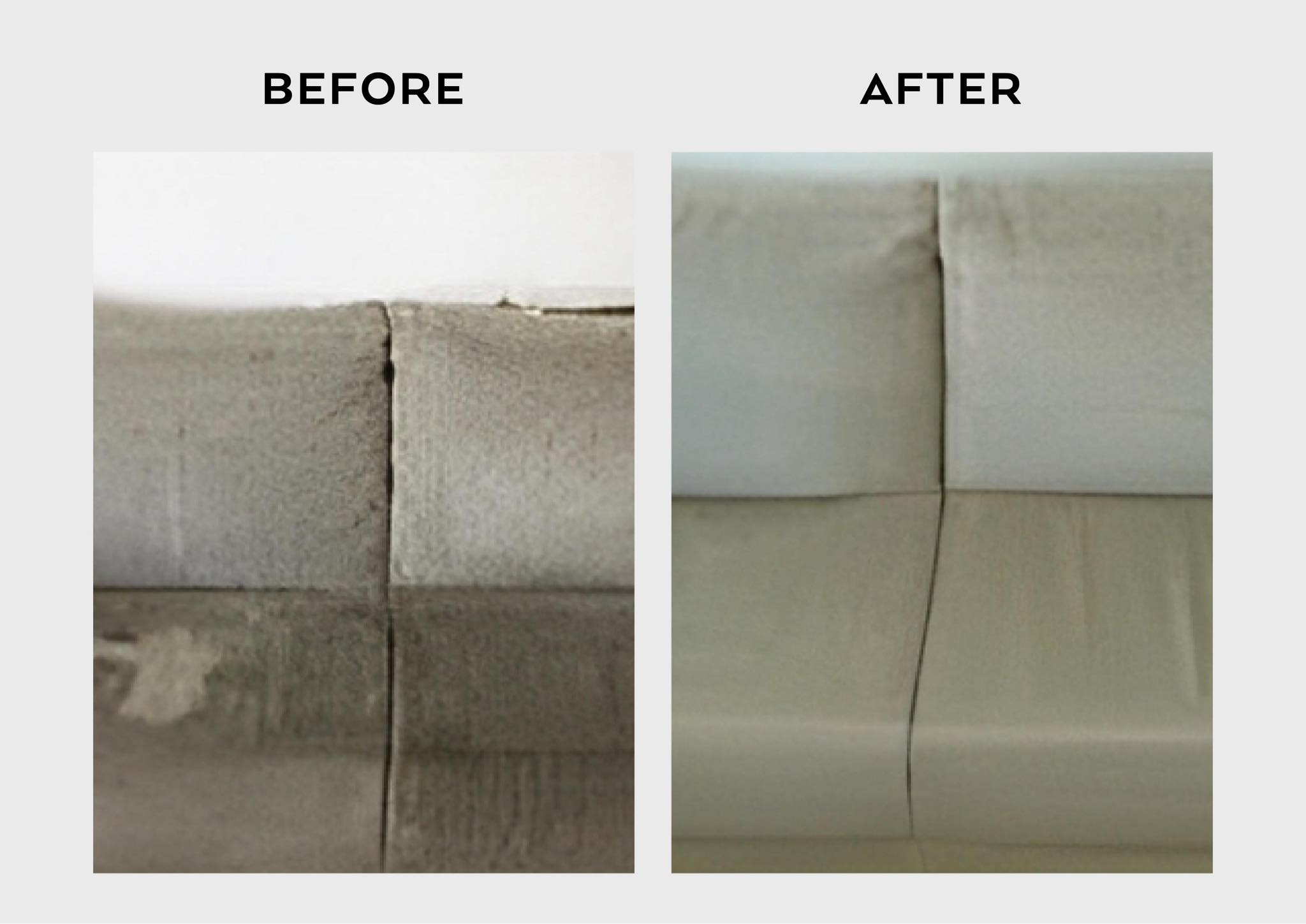
Couch stain removal starts with a material and damage assessment—not a promise that the strongest product wins. Xtreme Cleans cleans synthetic upholstery only.
This guide shows Maryland homeowners how to document a stain, identify fabric, compare a cleaner, understand the normal process, and recognize permanent damage. Xtreme Cleans accepts polyester, microfiber, olefin, nylon, and many synthetic blends after inspection. It does not clean leather or faux leather, wool, linen, silk, velvet, viscose, rayon, acetate, or triacetate.
First Decide Whether You Are Looking at Soil, Stain, or Damage
“Stain” is often used for three different conditions. Soil is foreign material that may be suspended and removed. A true stain changes or bonds to color. Damage changes the fiber, dye, backing, finish, texture, or construction itself. Cleaning may improve the first two but cannot replace missing dye, reverse bleaching, rebuild abraded pile, or repair a split seam.
Photograph the entire piece and the close-up under neutral light. Note the spill, age, prior products, odor, sticky residue, color change, texture, and whether liquid reached the cushion interior. If a spot looks lighter rather than darker, it may be dye loss rather than removable material. That distinction should be discussed before chemistry is applied.
Read the Label, Code, and Fiber Together
Look under cushions or beneath the piece for the manufacturer label and any W, S, WS/SW, or X code. The code is a routing clue, not a complete method. A cleaner still needs to consider actual fiber, color stability, backing, filler, interior markings, adhesives, prior protectant, age, and existing damage.
The IICRC consumer upholstery guidance notes that natural fabrics can present color, texture, and bleeding risks and that pre-cleaning evaluation matters. Xtreme Cleans follows relevant upholstery-cleaning principles but does not hold an IICRC certification. Its narrower synthetic-only scope is a safety boundary, not a limitation to hide.
- W: a water-based process may be permitted, subject to the actual fabric and testing.
- S: solvent-based care may be indicated; Xtreme Cleans should confirm whether the piece is inside its capability.
- WS/SW: more than one category may be allowed, but the cleaner still chooses from inspection and testing.
- X: vacuuming or brushing only is commonly indicated; do not improvise wet cleaning.
- No label: treat the piece as unknown until a qualified inspection identifies a safe path.
What to Tell the Cleaner About the Stain
The useful stain history is specific: what spilled, approximate date, whether heat was used, every product applied, whether the area was rinsed, and whether the problem returns after drying. Dish soap, laundry detergent, peroxide, vinegar, baking soda, enzyme spray, solvent, and store-bought “oxygen” products can leave different residues or alter dye. Do not conceal DIY treatment; it changes the technician’s test.
For pet accidents, say whether the liquid reached the cushion insert, decking, frame, or floor. Surface extraction cannot guarantee removal from an inaccessible cushion core or wood. Extensive urine, smoke, mold, contaminated water, or structural damage may be outside routine upholstery cleaning.
Until the inspection, avoid heat, aggressive scrubbing, soaking, and repeated product layering. Heat can set some soils or change a synthetic fiber; scrubbing can distort texture and spread the affected area; excess liquid can carry residue into cushion filling, decking, adhesive, or unfinished frame components. Blot a fresh spill with a clean white absorbent cloth when the care instructions allow, then stop if color transfers or the texture changes.
Keep the bottle or photograph the ingredient and direction panels of anything already used. “Upholstery spray” is not a complete product history, and two products sold for furniture can require different rinsing or safety steps. Save the product lot and safety information when available, and do not discard the container until the cleaner has reviewed it. If the spill involves an unknown chemical, bodily fluid, contaminated water, or a hazardous substance, identify it before a routine cleaner is asked to handle the piece.
Need a straight answer about your upholstery?
Text a photo and the relevant label or room details to (410) 819-2223, or call to discuss what is inside the verified service scope.
A Responsible Couch-Cleaning Process
- Review: confirm the piece, accepted synthetic fiber, label/code, stain history, damage, access, price and exclusions.
- Test: check an inconspicuous area for color transfer, texture change, or other instability.
- Prepare: remove dry soil and protect nearby floors, walls, electronics, and furniture.
- Treat: use chemistry and dwell time appropriate to the identified soil and accepted material.
- Extract and rinse: recover suspended soil and solution without unnecessary saturation.
- Inspect and dry: review the result, identify remaining permanent conditions, arrange cushions for airflow, and give aftercare instructions.
Xtreme Cleans gives accepted synthetic upholstery a normal 2–4 hour drying window. Cushion density, fabric, humidity, airflow, soil, and treatment can change the actual time. Do not sit on damp upholstery, stack damp cushions, replace throws, or allow pets onto the piece until it is dry.
Fabric Protection Must Be a Separate, Written Decision
A cleaner should not use “fabric protection” as a vague promise of stain-proof furniture. A protector, if offered, needs a product name, compatible-fabric determination, application instructions, cure time, price, exclusions, warranty discussion, and realistic maintenance explanation. It cannot make a couch spill-proof or reverse existing damage.
Fabric protector is not a standard included upholstery service. Ask before booking and get any optional item in writing. If it is not written into the confirmed scope, do not assume it is part of the appointment.
Cleaning Is Not a Germ-Kill or Medical Promise
Routine upholstery cleaning removes soil and residue from the material serviced. The CDC separates cleaning from sanitizing and disinfecting; antimicrobial claims require different evidence and label-controlled conditions. Xtreme Cleans does not advertise ordinary couch extraction as a germ-kill, allergy treatment, or medical service.
A cleaner can describe the physical process and the visible or tactile result without predicting health outcomes. If illness, chemical sensitivity, asthma, or infection control drives the request, discuss medical questions with a healthcare professional and product questions with the cleaner before the visit.
Compare Quotes Without Rewarding Overpromises
A useful quote identifies the exact piece, number of cushions, accepted fabric, included spot work, access, price, drying guidance, optional items, and rework process. Ask whether sectional components, loose pillows, skirts, backs, arms, decking, or deep cushion contamination are included. A low phone number with undefined scope is not a complete quote.
Reject promises made before the piece is inspected: “every stain,” “like new,” “fully sanitized,” “permanent protection,” or a guaranteed odor result from inaccessible material. Xtreme Cleans offers a satisfaction and rework commitment, but that does not convert dye loss, wear, damage, or a restricted fabric into a cleanable condition.
Maryland Coverage and Booking Preparation
Homeowners can review synthetic upholstery coverage in Pikesville, Essex, and Rockville. These are service-area links; acceptance still depends on the fabric and inspection.
Before calling, send the full couch, label, code, fiber line, stain close-up, cushion layout, and access path. Include what happened and every product used. That preparation lets Xtreme Cleans say yes or no within its real synthetic scope instead of discovering a restricted fabric after arrival.
Frequently Asked Questions
What should I send before booking couch stain removal?
Send photos of the full piece, the stain, the manufacturer label and cleaning code, plus the fabric composition if shown. Explain what spilled, when it happened, what products were used, and whether odor or moisture reached cushions or decking.
Which couch fabrics does Xtreme Cleans clean?
Xtreme Cleans cleans synthetic upholstery such as polyester, microfiber, olefin, nylon, and many synthetic blends after inspection. It does not clean leather or faux leather, wool, linen, silk, velvet, viscose, rayon, acetate, or triacetate.
Can professional couch cleaning remove every stain?
No. Soil may be removable while dye loss, bleaching, abrasion, heat damage, aged adhesive, marker, paint, or permanent fiber change remains. The cleaner should distinguish likely soil removal from damage that cleaning cannot reverse.
Is fabric protector included with Xtreme Cleans upholstery cleaning?
Do not assume so. Fabric protector is not part of a standard Xtreme Cleans visit. Ask for any optional product, price, compatibility, warranty effect, and application terms in writing before approving it.
How long does a professionally cleaned couch take to dry?
Xtreme Cleans gives a normal 2–4 hour dry-time window for accepted synthetic upholstery. Fabric, cushion construction, room humidity, airflow, soil and spot work can change the actual time. Keep people and pets off damp upholstery.
Need a straight answer about your upholstery?
Text a photo and the relevant label or room details to (410) 819-2223, or call to discuss what is inside the verified service scope.