

Flip up a sofa cushion and you’ll find a small tag with a single letter on it — W, S, WS, or X. That letter is the most important thing on the entire piece of furniture when it comes to cleaning, and most homeowners have never read it. It determines what chemistry can safely touch the fabric, whether a professional will take the job on, and whether that DIY spot-cleaner you’re holding is about to leave a permanent water ring.
Having cleaned furniture across Maryland since 2014, we check that tag — and the fabric itself — before we schedule a single piece. This guide decodes the four cleaning codes, explains which fabrics respond well to professional cleaning, and lays out our own scope honestly: what we clean, what we don’t, and why the “we clean everything” companies are the ones to be careful with.
The Four Codes, Decoded
| Code | Meaning | Typical Fabrics | Professional Cleanability |
|---|---|---|---|
| W | Water-based cleaning safe | Polyester, microfiber, nylon, olefin — most modern synthetics | Excellent — this is the code our process is built for |
| WS (or W/S) | Water or solvent, gentlest first | Synthetic blends, some cotton-poly mixes | Good — cleanable with controlled moisture after fabric testing |
| S | Solvent only — water damages it | Silk, some rayons, velvet, certain natural weaves | Specialist territory — water-based extraction is the wrong tool; we’ll say so |
| X | Vacuum/brush only — no liquids at all | Delicate or coated specialty fabrics | Not wet-cleanable by anyone, whatever they promise |
One caution before trusting any tag: codes describe the fabric as manufactured. A decade of sun, body oils, and previous cleaning attempts changes how a fabric behaves — which is why our first step on every piece is a fabric analysis (composition, dye stability, wear patterns), not the tag alone.
Our Honest Scope: Synthetics, Confirmed First
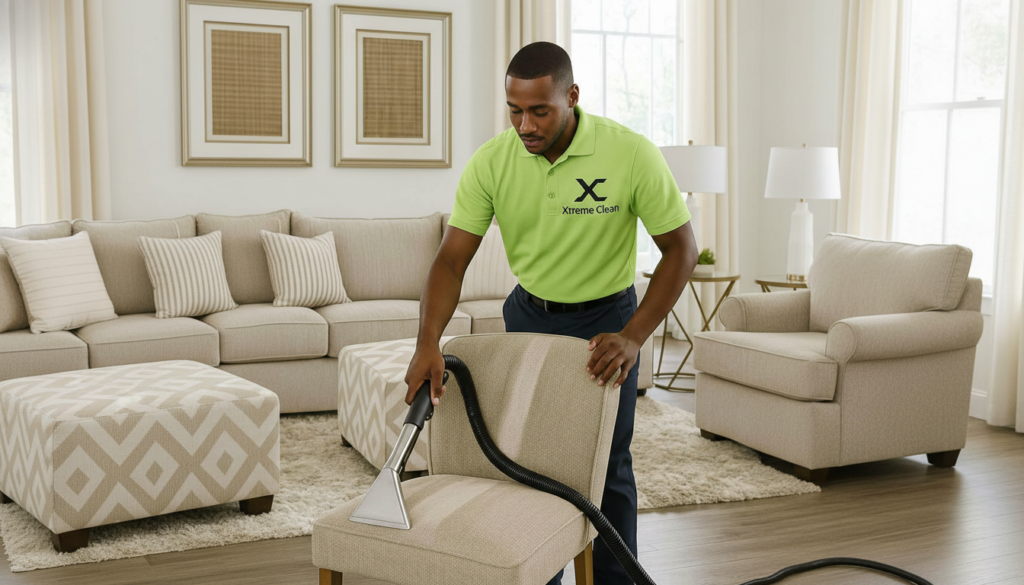
Here’s the positioning you won’t hear from most companies: we clean synthetic-fabric upholstery, and we confirm the fabric before scheduling. Polyester, microfiber, nylon, synthetic blends — the W and most WS fabrics that make up the large majority of family-room furniture sold in the last twenty years. That’s not a limitation we apologize for; it’s the honest match between our process and the fabrics it serves brilliantly.
Why draw the line there? Because low-moisture hot water extraction — the process that gets outstanding results on synthetics — is genuinely the wrong tool for S-coded silk or an X-coded specialty weave. A company that says yes to every fabric is either carrying dry-solvent capability they rarely use well, or gambling with your furniture. When a piece isn’t a fit for our process, we say so and point you toward a specialty cleaner instead — the same honest-assessment rule we apply to carpet that needs replacement instead of cleaning.
What the Process Looks Like on a Synthetic Sofa
- Fabric analysis — composition, dye stability, and wear checked before anything is applied.
- Home protection — guards and moisture barriers around the work area.
- Soil and allergen pre-treatment — breaks down the body oils and dust-mite load that upholstery accumulates through direct skin contact (a couch soils differently than a floor — armrests and headrests take the most).
- Controlled agitation and deep fiber cleansing — worked to the fabric, not through it.
- Controlled hot water extraction — low-moisture, targeting the cushion foam where trapped oils and odor actually live, not just the fabric face.
- Accelerated drying — high-velocity air movers; furniture back in use in 2–4 hours.
The Synthetics Compared: What You’re Probably Sitting On
| Fabric | How It Behaves | Cleaning Notes |
|---|---|---|
| Polyester | The workhorse of modern sofas — colorfast, stain-resistant, affordable | Cleans exceptionally well; oil-based stains (body oils on armrests) are its weak point and exactly what pre-treatment targets |
| Microfiber | Ultra-fine polyester weave; dense and durable | Excellent cleanability, but prone to visible water marks from DIY spot-cleaning — controlled moisture matters more than on any other synthetic |
| Nylon | The most resilient fiber — bounces back from crushing | Takes professional cleaning beautifully; holds appearance longest in heavy-use rooms |
| Olefin blends | Budget-friendly, moisture-resistant | Cleans well but crushes under heat and friction — gentle mechanical action required |
If your furniture is any of these — and if it was bought from a mainstream retailer in the last two decades, it very likely is — professional cleaning is low-risk, high-reward. The fabric analysis confirms it before we schedule, so there’s never a surprise on cleaning day.
Reading Your Own Furniture: a 2-Minute Check
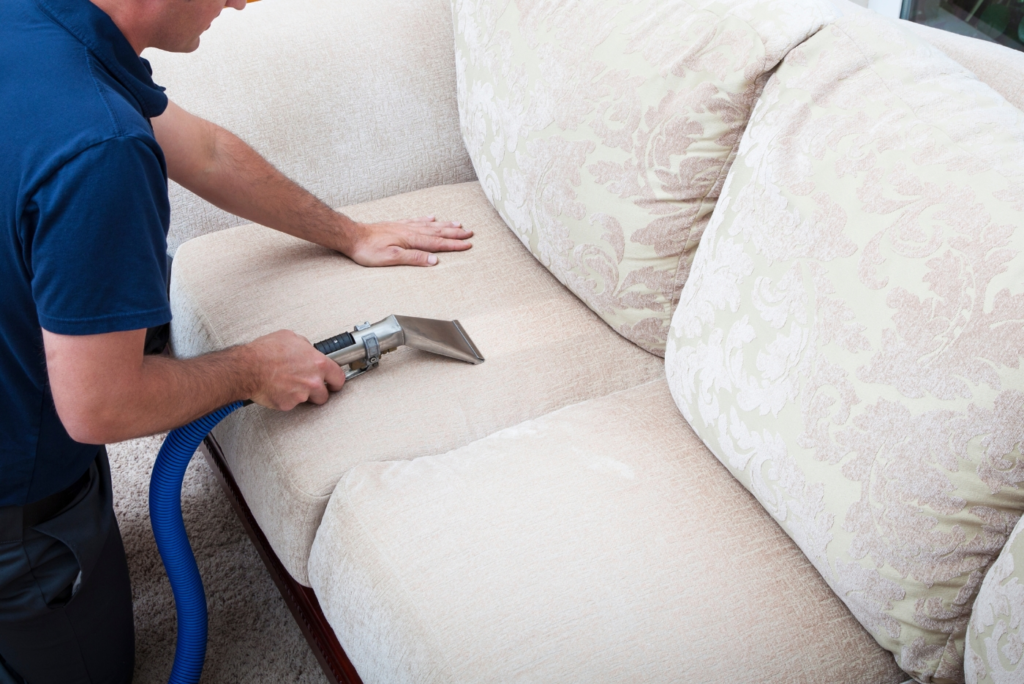
- Find the tag — under seat cushions or on the deck/frame underside. The cleaning code is separate from the flammability label.
- No tag? Common on older or reupholstered pieces. Judge by fiber: if it’s a known synthetic (microfiber, polyester weave), it almost certainly cleans as a W. If it might be silk, rayon, or an antique weave — treat it as S until a professional confirms otherwise.
- Spot-cleaning a W fabric yourself: blot (never rub), water-based cleaner only, test on a hidden area first, and keep the moisture minimal — soaking cushion foam creates the odor problem you were trying to avoid.
- S or X tag: put the spray bottle down. Water-based products on these fabrics cause rings, shrinkage, or texture damage that no follow-up fixes.
Frequently Asked Questions
What does the W code on my couch mean?
Water-based cleaning is safe — it’s the most common code, covering most modern synthetics like polyester and microfiber, and it’s exactly what professional low-moisture extraction is designed for.
Can you clean my WS-coded sofa?
Usually yes — WS fabrics take water-based cleaning with the gentlest-first rule. We confirm with a fabric analysis before scheduling, same as every piece.
Why won’t you clean my silk or antique piece?
Because water-based extraction is the wrong chemistry for S- and X-coded fabrics, and doing it anyway risks permanent damage. We’d rather send you to a solvent-cleaning specialist than experiment on your furniture.
How long until the sofa is usable after cleaning?
2 to 4 hours to dry with accelerated air movement.
More on choosing wisely: our guides to picking the right upholstery cleaner and keeping your couch clean year-round. And when your synthetic sofa is ready for its deep clean, our upholstery crews cover Towson, Pikesville, and Essex most weeks.
Ready for a real answer on your upholstery cleaning?
Call (410) 819-2223, or send a photo of the piece and its tag, and a written price comes back the same working day.