

Hot water extraction carpet cleaning is a deep-cleaning method that spray-injects heated water and a cleaning solution into the carpet pile, then vacuums it straight back out with the loosened soil and excess moisture. It is the method most people call steam cleaning, and it is the method Xtreme Cleans uses on every carpet job: a truck-mounted extractor on synthetic carpet, dry in 2–4 hours.
Hot water extraction cleaning is a rinse rather than a surface treatment: the water goes into the pile and comes back out, carrying suspended soil with it. I’ve spent 20 years in the cleaning industry, running professional carpet cleaning services across Maryland homes and businesses, and this guide covers how the method works, what “steam cleaning” really means, which machines do it, what it costs and when it is the wrong choice.
Updated October 2026.
What Is Hot Water Extraction Carpet Cleaning?
In carpet cleaning, hot water extraction (HWE) is defined by the Carpet and Rug Institute (CRI) as a “cleaning method in which pressurized hot water is spray-injected into carpet pile yarns, and almost immediately thereafter, injected water is vacuum-extracted to flush and physically remove soils and excess moisture from the carpet pile.” That definition comes from CRI’s white paper Carpet Preconditioning: Its Impact on Cleaning.
The method goes by several names, including hot water carpet extraction, hot water extraction cleaning and steam cleaning. Three parts of the CRI definition matter to a homeowner. The water is hot, which helps the cleaning chemistry work. It is injected into the pile yarns rather than sprayed on top. And it is vacuumed out almost immediately, so the soil leaves the carpet with the water.

What Is the IICRC S100 Carpet Cleaning Standard for Hot Water Extraction?
The IICRC S100 is the carpet cleaning industry’s published standard for professional carpet and rug cleaning. Its 2015 edition, as announced on its release, “describes the procedures, methods and systems to be followed when performing” professional commercial and residential carpet and rug maintenance and cleaning, and it makes no attempt “to evaluate the strengths or weaknesses of individual cleaning methods.” Xtreme Cleans works to the IICRC S100 standard. The standard sets procedures; it does not rank hot water extraction above other methods.
How Does the Hot Water Extraction Method Work in Carpet Cleaning?
Applied as a hot water extraction method, carpet cleaning on Xtreme Cleans jobs runs in four steps: pre-inspection and vacuuming, pre-treatment with brush agitation, hot water extraction with a truck-mounted extractor, then a rinse, deodorizer and drying with air movers. The carpet cleaning process guide follows the whole visit, from quote to dry carpet.
Step 1: Pre-Inspection and Vacuuming
The technician confirms the carpet is a synthetic fiber, such as nylon, polyester or olefin, and notes traffic lanes, spots and pet areas before any water goes down. Loose dry soil comes out first, because the Carpet and Rug Institute states that “vacuuming before deep cleaning is critical and makes a difference in the end result.”
Xtreme Cleans cleans synthetic carpet fibers such as nylon, polyester and olefin; wool and wool blends are declined.
Step 2: Pre-Treatment and Brush Agitation
A pre-treatment goes onto the carpet first and a brush works it into the pile, so the soil is loosened before the rinse. The pre-treatment solutions are biodegradable and child-safe. This step does more than the hot water: in CRI’s laboratory test on nylon carpet, applying a preconditioner before hot water extraction raised measured soil removal by an average of 16.3% over adding detergent to the machine’s solution tank alone.
Pet-urine areas get their own treatment, Bio Release, an enzyme and bacterial digester quoted separately from the 3-area package, and it goes on before the extraction rinse. For a fresh spot at home, CRI’s carpet care advice says not to use a steam cleaner on urine “because the heat will set the stain and the smell,” and to extract the spill with a wet vacuum and cool water instead.
Step 3: Hot Water Extraction With a Truck-Mounted Extractor
The extractor heats the water, the wand spray-injects it with cleaning solution into the pile, and the vacuum pulls the water, the suspended soil and the solution back out a moment later. Xtreme Cleans runs a Diamondback GTXR+ truck-mounted extractor. The machine stays in the van and only the hoses come inside, so parking close to the entrance helps.
Step 4: Rinse, Deodorizer and Drying
A neutral or acidic rinse removes leftover cleaning solution, because residue left in the pile attracts soil; low-residue cleaning explains why that matters. A deodorizer goes on and air movers speed drying, so the carpet is dry in 2–4 hours. A typical 3-area visit takes 1 to 2 hours on site.
Keep foot traffic off the carpet until it is dry. Drying runs slower on humid days, which Maryland humidity and carpet drying covers in detail.
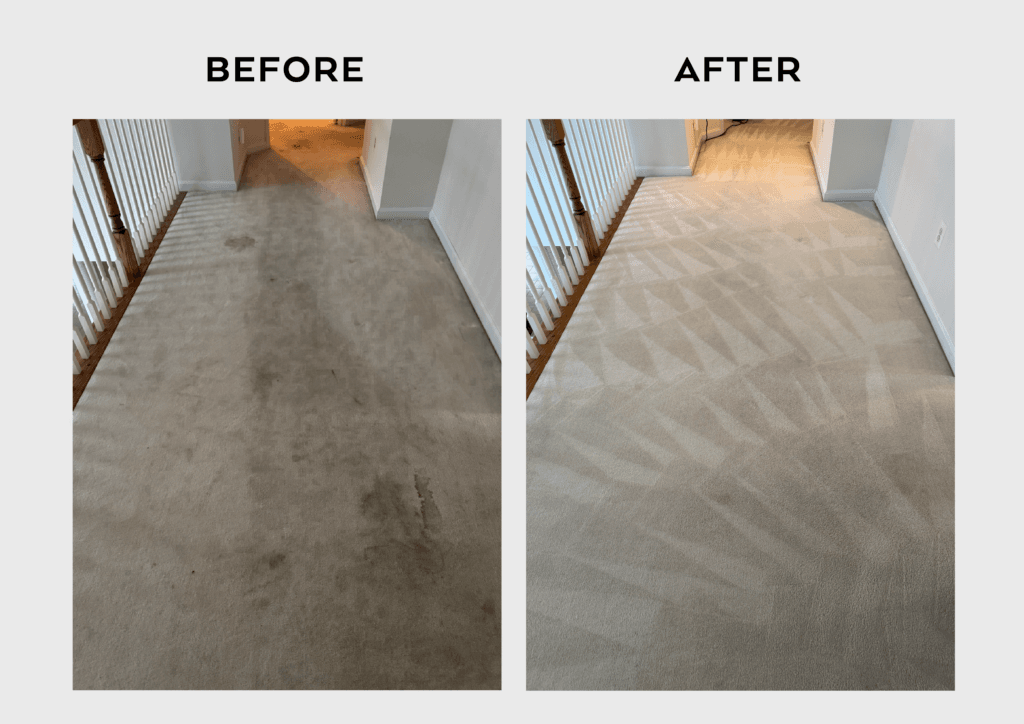
What Does a Finished Hot Water Extraction Job Look Like?
The wand passes leave straight stripes in the pile, visible in the video’s cover image below.
Hot Water Extraction vs Steam Cleaning: Is It the Same Thing?
Yes. For carpet, “steam cleaning” is the everyday name for hot water extraction. Shaw Floors’ carpet care guide reads: “Schedule a professional hot water extraction (steam cleaning) anywhere from 6-18 months, depending on traffic.” Wikipedia’s hot water extraction article states, “It is sometimes called ‘steam cleaning’.”
The steam cleaning vs hot water extraction question is about names, not methods, and the machine does not clean with vapor. A handheld vapor steamer is a different tool, covered by a separate Wikipedia entry on steam cleaning.
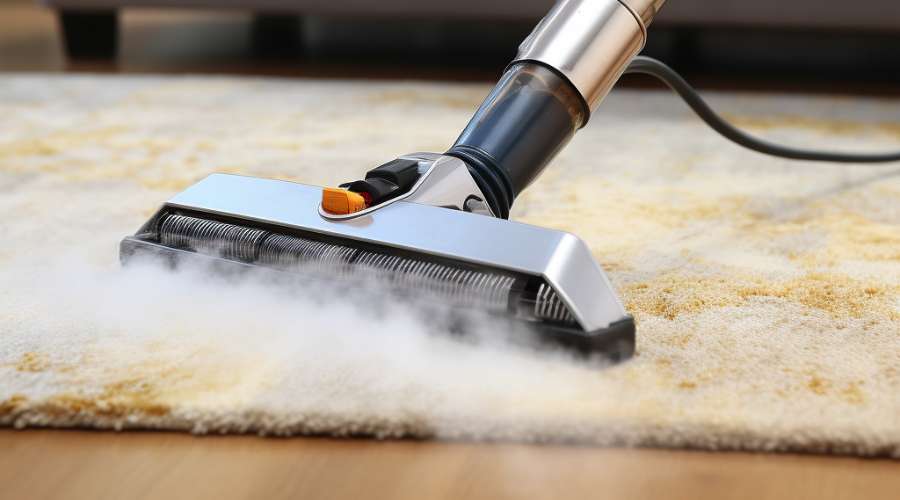
Is Hot Water Extraction Better Than Regular Steam Cleaning for Carpets?
When a carpet company says “regular steam cleaning,” the service is usually hot water extraction under another name, so the useful question is what the machine does. Ask whether it injects hot water and solution into the pile and vacuums it back out, and whether pre-treatment is part of the price. For how hot water extraction compares with dry, encapsulation and bonnet cleaning, read steam cleaning versus dry carpet cleaning methods.
Can You Clean Carpet With Just Hot Water?
Not as well as with pre-treatment. In the CRI white paper’s tests, detergent added to the solution tank removed an average of 4.6% more soil than flushing with plain hot water, and applying a preconditioner first raised soil removal by a further 16.3% on average. Hot water carpet cleaning that skips the pre-treatment step gives up the largest measured gain.
Does a Carpet Cleaner That Heats the Water Make Extraction Cleaning Better?
“Heat extraction carpet cleaning” is another name searchers use for the same method, and heat helps the chemistry rather than cleaning on its own. The CRI paper lists four fundamentals of soil suspension: detergent application, “using heat or temperature to increase chemical activity,” agitation, and dwell time for the chemicals to work. Carpet cleaners that heat the water still need the other three, so a carpet cleaner with heated water but no pre-treatment, agitation or dwell time is trying to clean carpet with heat alone: one fundamental out of four.
Truck-Mounted vs Portable vs Rental Hot Water Extraction Carpet Cleaners
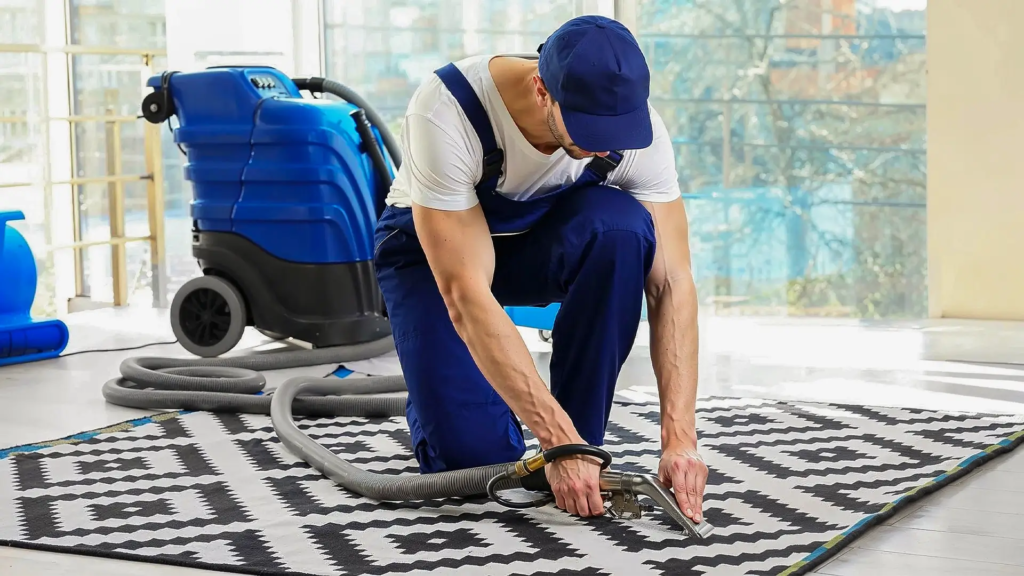
In each carpet cleaner, hot water extraction follows the same inject-and-vacuum principle; the difference is where the machine runs and who runs it. A truck-mounted extractor stays in the van and only the hoses come inside. A portable extractor is carried into the room. A rental carpet cleaner is a portable machine the homeowner runs.
| Machine | Where it runs | Run by |
|---|---|---|
| Truck-mounted extractor | Stays in the van; hoses run into the home | Crew |
| Portable extractor | Carried into the room | Crew |
| Rental carpet cleaner | Carried into the room | You |
Xtreme Cleans carpet jobs run on a truck-mounted extractor paired with Green Seal GS-37 certified chemistry; GS-37 is a third-party standard whose scope covers industrial and institutional cleaners, carpet cleaners included.
With a rental machine, the result depends on the operator, and the main risk is carpet left wet. The EPA’s mold and moisture guide says that “if wet or damp materials or areas are dried 24-48 hours after a leak or spill happens, in most cases mold will not grow.” The rental versus professional comparison weighs cost and drying side by side.
Does Hot Water Extraction Disinfect Carpet?
No. Hot water extraction is cleaning, not disinfection.
The CDC distinguishes cleaning from sanitizing and disinfecting. An antimicrobial claim depends on the product, allowed surface, concentration, wet contact time, label directions, and target organism. Equipment heat by itself is not enough evidence to describe an ordinary carpet appointment as disinfection.
This is reinforced by certification scope. The Green Seal GS-37 standard covers categories of routine professional cleaners and excludes disinfectants and sanitizers from that standard. Xtreme Cleans can accurately say it uses GS-37 certified cleaning chemistry where applicable; it should not convert that product credential into a pathogen, allergy, or medical promise.
Is Hot Water Extraction Used for Upholstery Cleaning?
Yes, on synthetic fabrics, and the upholstery process includes a controlled hot water extraction step. Hot water extraction upholstery cleaning starts with a label and fiber review plus an inconspicuous color test before any water touches the furniture, because a method suited to installed carpet does not transfer automatically to a couch. Xtreme Cleans accepts synthetic upholstery only (polyester, microfiber, olefin, nylon and many synthetic blends) and does not clean leather or faux leather, wool, linen, silk, velvet, viscose, rayon, acetate or triacetate. See our upholstery cleaning service for what is accepted.
When Is Hot Water Extraction Not the Right Choice?
Hot water extraction is the wrong first step in four situations:
- Wool and other natural fibers: Xtreme Cleans cleans synthetic carpet only and declines wool and wool blends.
- Fresh pet urine: CRI’s advice for a fresh spot is a wet vacuum and cool water rather than a steam cleaner; on a cleaning visit, urine areas get an enzyme treatment before the extraction rinse.
- Visible mold: Xtreme Cleans declines carpet with visible mold and refers it to a remediation professional.
- Flooded or water-damaged carpet: that is restoration work, covered below.
Is Carpet Water Extraction and Drying After a Flood the Same Job?
No. Carpet water extraction after a flood or leak, sometimes called flood water carpet extraction, removes standing water and dries the carpet and pad, and that water extraction, carpet drying and pad work is water-damage restoration, which Xtreme Cleans does not offer. For anyone working out how to extract water from carpet after a leak, the EPA’s first rule is speed: “it is important to dry water-damaged areas and items within 24-48 hours to prevent mold growth,” so call a water-damage restoration company first. Water extraction carpet cleaning, the method on this page, is for soiled carpet; water extraction from carpet after a flood is a separate trade. The guide to mold and damp carpet risks explains when damp carpet needs attention.
How Do You Find a Carpet Cleaner That Uses Hot Water Extraction?
To find a carpet cleaner that uses hot water extraction, ask three questions before booking: does the machine inject hot water and solution and vacuum it back out, is the extractor truck-mounted or portable, and is pre-treatment included in the price. A company that answers all three plainly is quoting hot water extraction.
Questions to Ask Hot Water Extraction Carpet Cleaning Companies
Ask which surfaces are included, what “steam” means, which equipment will be used, how the material is inspected and tested, whether the quote includes treatment and rinsing, what furniture moves, what spots are uncertain, and how drying is supported.
Also ask about insurance, technician screening, satisfaction policy, and excluded services. Xtreme Cleans carries a $4 million ERIE policy, uses background-checked technicians, and offers a satisfaction/rework commitment. Those are verifiable trust facts; they do not turn restricted fabrics, permanent damage, or unsupported health outcomes into part of the offer.
What Do Hot Water Extraction Carpet Cleaning Services Cost in Maryland?
Our hot water extraction carpet cleaning services are not priced as a premium upgrade, because extraction is the standard process on every job. The published offer is $199 for 3 areas, with stairs and pet-urine treatment quoted separately; the Maryland carpet cleaning cost guide breaks down what moves the price, including cost per room.
Frequently Asked Questions About Hot Water Extraction Carpet Cleaning
These are the questions Maryland homeowners ask us most often about hot water extraction.
1. How often should I get my carpets professionally cleaned?
Every 12 to 18 months for most homes. The Carpet and Rug Institute recommends a professional deep clean every 12 to 18 months, and Shaw Floors gives a range of 6 to 18 months depending on traffic, so heavily used rooms sit at the shorter end. Our guide to how often to clean carpet sets out what shortens the interval.
2. Will hot water extraction damage my carpet?
Not when the fiber suits it. Shaw Floors recommends professional hot water extraction in its own carpet care guide, and Xtreme Cleans uses it on synthetic fibers only. The real risks are the wrong fiber and carpet left wet, which is why the crew declines wool and dries with air movers to a 2–4 hour dry time. Our guide to carpet-cleaning myths about extraction, shrinkage, stains and drying covers the rest.
3. How long does it take for carpets to dry after hot water extraction?
Carpet is dry 2–4 hours after an Xtreme Cleans hot water extraction, with air movers set up during the visit. Humid weather slows drying, and air conditioning or a dehumidifier speeds it up. Visit length is a separate clock: how long carpet cleaning takes covers the 1 to 2 hours on site.
4. Can I walk on the carpet right after cleaning?
Wait until the carpet is dry, typically 2–4 hours after cleaning, before normal foot traffic returns.
5. Does hot water extraction remove pet odors and stains?
Hot water extraction rinses residue out of the pile, but the odor source needs its own treatment first. Xtreme Cleans treats urine areas with Bio Release, an enzyme and bacterial digester rather than an oxidizer, quoted separately from the $199 package. The pet urine removal guide explains the full sequence.
6. Is hot water extraction safe for wool or delicate carpets?
Xtreme Cleans does not clean wool carpet. We clean synthetic fibers such as nylon, polyester and olefin; for wool and other delicate natural fibers, look for a cleaner who specializes in that fiber.
7. How much does professional carpet cleaning cost in Maryland?
Our 3-area package is $199, with stairs and pet-urine treatment quoted separately; a typical visit runs $199–$320 depending on area size and soil level. The carpet cleaning price guide has the details.
8. Can I rent a hot water extraction machine and do it myself?
Yes. A rental carpet cleaner works on the same inject-and-vacuum principle at a smaller scale, and the result depends on the operator. The risk to manage is moisture: the EPA notes that wet materials dried within 24–48 hours in most cases do not grow mold.
9. Do you use hot water in a carpet cleaner?
Yes. Hot water extraction uses heated water by definition, and the CRI white paper lists heat as one of the four fundamentals of soil suspension because it increases chemical activity. In our truck-mounted carpet cleaner, hot water comes from the machine itself; with a rental machine, follow the manufacturer’s instructions for water temperature.
10. How can I maintain my carpet between professional cleanings?
Vacuum traffic lanes daily and every carpeted area weekly, as Shaw Floors advises, and work spot cleaner from the edges of a spill toward the center. Afterward, blot with clear water, which CRI recommends “to remove any remaining product.” Our household vacuuming schedule sets the routine.
11. Does hot water extraction remove allergens?
Xtreme Cleans does not sell hot water extraction as an allergy or asthma treatment. It is a soil-removal method, and the evidence on carpet cleaning and allergies is set out in does carpet cleaning help with allergies.
12. What’s the best time of year to schedule cleaning?
Any season works. Humid summer days slow drying, so running the air conditioning or a dehumidifier during and after the visit helps keep drying in the 2–4 hour range.
13. Do I need to move my furniture before cleaning?
Yes, if you want the carpet underneath cleaned. The Xtreme Cleans crew does not move furniture, so move what you want cleaned beneath before the visit. Heavy or fragile items such as electronics, TVs and antiques stay in place and are cleaned around.
14. Where can I get hot water extraction carpet cleaning near me in Maryland?
Xtreme Cleans provides carpet cleaning with hot water extraction across 12 Maryland counties and Baltimore City. The carpet cleaning service page lists every county, and a written quote comes back the same working day.
Hot Water Extraction in Maryland Homes
Maryland’s humid summers make drying the part of the job to plan around, which is why every Xtreme Cleans extraction finishes with air movers. The same truck-mounted process runs in Baltimore, Rockville, Annapolis and Columbia homes alike.
Is Hot Water Extraction Worth It?
For soiled synthetic carpet, yes: it flushes soil out of the pile instead of treating the surface, and it is the method Shaw Floors names in its own carpet care guide.
Explore our professional carpet cleaning service in Maryland to get started, pair it with upholstery cleaning or tile and grout cleaning, or browse the Xtreme Cleans blog for more cleaning and maintenance guides.
This is exactly how we approach carpet cleaning in Owings Mills — and the same crews cover Urbana and Westminster.
Ready for a real answer on your carpet cleaning?
Text a photo of the problem to (410) 819-2223 and we’ll reply in minutes — or call for same-week availability across Maryland.