

Carpet cleaning myths usually begin with a true observation and end with the wrong rule. Vacuuming matters, but it cannot rinse embedded soil. Water can damage some materials, but that does not mean every controlled extraction causes damage. A dramatic spot may improve, but appearance alone cannot tell whether it is removable soil or permanent color loss. This guide separates those ideas so Maryland homeowners can make a practical decision without a guarantee, scare tactic, or invented anecdote.
Substantively refreshed August 2026. Xtreme Cleans is a family-owned Maryland company that has cleaned 900+ buildings since 2014. The operating lesson behind this guide is simple: inspect the material, define the problem, choose a method that fits, recover moisture, and explain the limits before work begins. The company uses truck-mounted hot water extraction for its normal carpet service and gives a normal 2–4 hour drying window.
Myth 1: Regular Vacuuming Makes Deep Cleaning Unnecessary
Vacuuming is the first line of carpet maintenance. It removes loose particulate soil before foot traffic grinds that material farther into the pile. It also helps slow the dull traffic-lane appearance that develops when dry soil accumulates. What it cannot do is rinse oily residue, many tracked-in films, or material that has bonded to the fiber.
The Carpet and Rug Institute’s homeowner guidance recommends professional deep cleaning every 12–18 months as a general benchmark, while telling owners to follow their warranty. That is not a rule that every household must book on the same calendar. Pets, shoes, children, traffic, spills, carpet construction, and manufacturer requirements can shorten or lengthen the useful interval. Our guide on how often to book a professional carpet clean works through those factors one by one.
Myth 2: Every Carpet Machine Does the Same Job
A machine name does not establish a result. Cleaning depends on inspection, appropriate chemistry, agitation where needed, dwell time, controlled rinsing, moisture recovery, dry passes, and airflow. A rental unit, household spot machine, portable extractor, and truck-mounted system may all put liquid on carpet, but their heat consistency, vacuum recovery, tools, and operator decisions differ.
This does not make every small DIY task unreasonable. A fresh, limited spill may only need careful blotting and a product allowed by the carpet manufacturer, the two things a basic spot-cleaning kit is built around. The mistake is assuming that more solution, more passes, or a stronger mixture automatically produces a deeper clean. Excess product can leave residue; excess moisture can move a problem into the backing or pad.
Myth 3: Deep Cleaning Automatically Damages or Shrinks Carpet
Water is not the only variable in shrinkage or distortion. Fiber, backing, seams, installation, temperature, chemical choice, agitation, and drying all matter. A cleaner should identify the carpet, look for loose seams or pre-existing damage, ask about prior products, and adjust the process. Delicate or unknown material may require a specialist rather than a routine residential method.
Xtreme Cleans works to the IICRC S100 cleaning standard but does not hold an IICRC certification. That wording matters: a published standard can guide process without becoming a credential the company does not possess. A homeowner should ask any provider what they inspected and why the proposed method fits the actual carpet.
Myth 4: Professionally Cleaned Carpet Must Stay Wet All Day
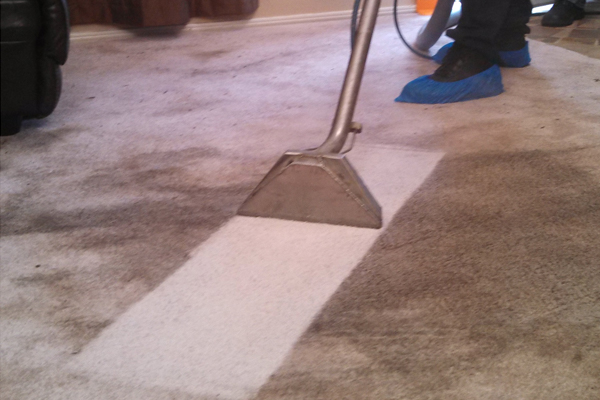
Xtreme Cleans gives a normal 2–4 hour drying window after scheduled carpet cleaning. It is guidance, not a universal guarantee. Carpet construction, the amount and type of soil, spot treatment, indoor humidity, room temperature, HVAC operation, and air movement affect evaporation. Dry passes and balanced solution delivery matter because water that is recovered does not have to evaporate inside the home.
Do not confuse that service window with water intrusion. A carpet and pad that were wet before the appointment are a different problem. EPA moisture guidance recommends drying wet materials promptly and ideally within 24–48 hours; material that cannot be cleaned and dried may need removal. A leak, sewage event, repeated basement dampness, or visible growth needs the appropriate moisture or remediation professional, not a routine cleaning promise.
Unsure whether the carpet needs maintenance cleaning or a different specialist?
Text a carpet photo and the number of areas to (410) 819-2223, or call for a scope-based answer before booking.
Myth 5: A Professional Can Guarantee Every Stain
“Stain” is often used for several different conditions. Some marks are removable soil. Others are dye loss, bleaching, abrasion, pile distortion, adhesive, paint, a reaction with an earlier product, or contamination that reached the pad or subfloor. Cleaning can remove soil; it cannot replace missing dye or rebuild worn fiber.
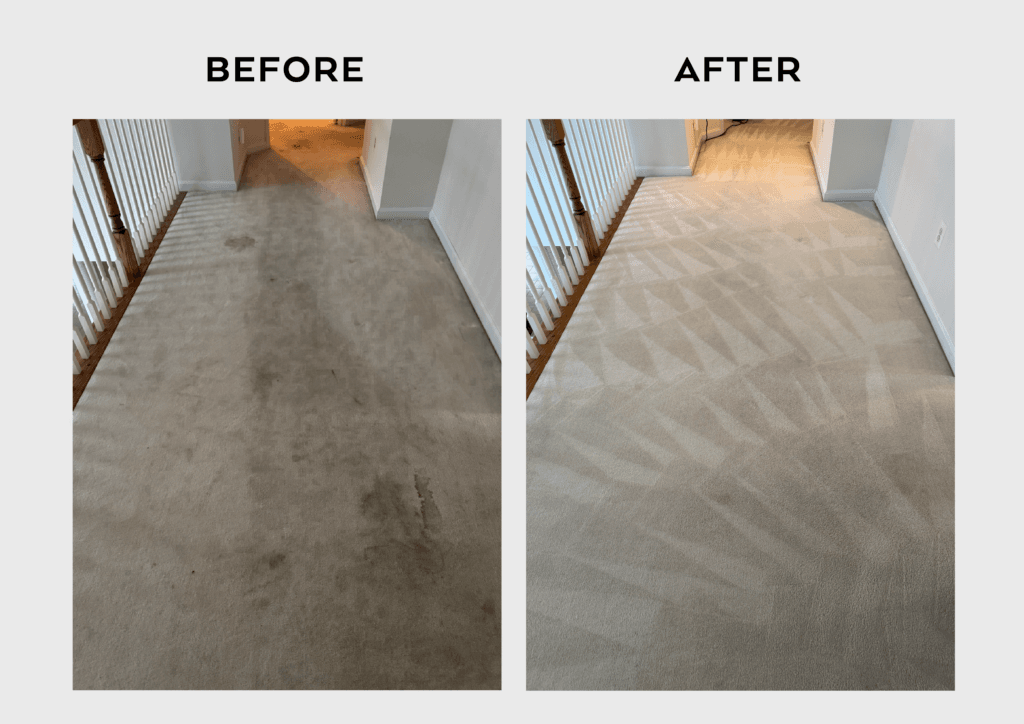
A responsible estimate distinguishes the cleaning process from the visual outcome. Photos can help identify the likely category, but they cannot reveal every layer of the carpet. Testing may show whether a mark responds. Even then, an old or chemically altered spot may improve without disappearing. That is why the real Xtreme Cleans image above is documented as one carpet—not proof of the next carpet’s result.
Myth 6: A Cleaner Carpet Creates a Guaranteed Health Outcome
Carpet can hold tracked-in soil and settled particles, and regular maintenance removes material from the floor. That statement is different from promising relief from asthma, allergies, infection, or another medical condition. The EPA’s indoor-air guidance places cleaning alongside source control, ventilation, filtration, and moisture control. No single carpet appointment replaces those other measures or medical advice.
Xtreme Cleans describes routine carpet work as cleaning. It does not promise that hot water, equipment temperature, or visible soil removal disinfects carpet. The CDC distinguishes cleaning, sanitizing, and disinfecting, and any antimicrobial product would need its own label, compatible surface, use directions, and contact time.
Myth 7: “Green” Means the Same Thing on Every Product
Words such as natural, eco-friendly, non-toxic, and green are not interchangeable technical specifications. Xtreme Cleans uses Green Seal GS-37 certified chemistry where applicable. The GS-37 standard covers categories that include carpet cleaners and evaluates safer chemistry and performance; it specifically excludes disinfectants and sanitizers from that standard’s scope.
Certification also does not remove the need to follow the product label. Dilution, material compatibility, ventilation, personal protection, and equipment use still matter. Never mix cleaning products, and do not assume a product approved for one carpet or purpose is appropriate for every fiber, upholstery fabric, or stain.
Myth 8: The Lowest Advertised Number Is the Final Price
A low headline can omit the area size, minimum charge, pre-treatment, steps, access, travel, or conditions that change the work. Xtreme Cleans publishes one residential carpet offer: $199 for three carpeted areas. One or two areas, five or more areas, commercial work, and other services require a quote. The $199 offer must not be extended to upholstery, rugs, tile, water damage, or an undefined whole home.
Compare written scopes, not just totals. Ask what counts as an area, what the estimate assumes, what is excluded, whether the price can change after inspection, and how concerns are handled. Homeowners can review carpet coverage in Towson, Catonsville, and Annapolis without turning this informational guide into a competing city-service page.
Myth 9: Carpet Should Be Cleaned Only When It Looks Dirty
Visible appearance is a late and imperfect signal. Dark traffic lanes may be soil, but they may also include permanent wear. A pale carpet can hold dry soil before the color change becomes obvious. Maintenance timing should consider the manufacturer, use, pets, entrances, and vacuuming—not wait for a photographically dramatic before condition.
The CRI residential and commercial standards frame carpet care as a program. Entry control, routine vacuuming, prompt spot response, periodic cleaning, and documentation each do a different job. Waiting too long makes the cleaner responsible for years of wear that no cleaning method can reverse.
A Better Decision Checklist
- Identify the material. Find the manufacturer or installation information when possible and disclose wool, natural-fiber, specialty, or uncertain material before booking.
- Describe the problem. Separate routine soil from pet urine, odor, water intrusion, dye loss, wear, and an unknown chemical reaction.
- Ask for the method and limits. A useful answer covers inspection, chemistry, extraction, drying, furniture, and results that cannot be promised.
- Compare a written scope. Confirm rooms or areas, price assumptions, access, timing, exclusions, and the process for raising a concern.
- Plan the drying period. Keep normal traffic off damp carpet, maintain suitable HVAC and airflow, and follow instructions for furniture.
Across every job since 2014, the repeated lesson is that the condition must be classified before it is sold. Routine soil, permanent wear, water damage, specialty fiber, and contamination below the carpet are not five names for the same service. An honest “this needs a different specialist” is more useful than forcing every problem into an extraction appointment.
Frequently Asked Questions
Is vacuuming enough to keep carpet clean?
Vacuuming is essential routine maintenance, but it does not replace periodic deep cleaning. The Carpet and Rug Institute recommends professional deep cleaning every 12–18 months as a general benchmark and tells owners to check the carpet warranty for its specific requirements.
Does hot water extraction shrink carpet?
Shrinkage is not an expected result of a correctly selected and controlled process. Risk depends on carpet construction, installation, fiber, heat, moisture, and drying. A cleaner should inspect first and decline or adjust the method when the material is outside the normal service scope.
How long should carpet take to dry after Xtreme Cleans service?
Xtreme Cleans gives a normal 2–4 hour drying window. Humidity, airflow, room temperature, carpet construction, soil, and spot work can change the actual time. This window describes scheduled cleaning, not a flood or an already wet carpet and pad.
Can a professional guarantee every carpet stain will disappear?
No. A visible mark may be removable soil, but it can also be dye loss, wear, bleaching, a chemical reaction, or contamination below the carpet. Inspection and testing improve the decision, but an honest cleaner does not guarantee reversal of permanent damage.
Is carpet cleaning the same as sanitizing or disinfecting?
No. CDC guidance distinguishes cleaning from antimicrobial processes. Xtreme Cleans sells routine carpet service as cleaning and soil removal; it does not advertise the normal extraction service as sanitizing, disinfecting, or a medical treatment.
Want a clear carpet-cleaning scope without a stain guarantee or surprise add-on?
Text a carpet photo and the number of areas to (410) 819-2223, or call for a scope-based answer before booking.