

Ask around about professional carpet cleaning in Maryland and you’ll hear the same worry again and again: “Won’t the carpet stay wet forever in this humidity?” It’s a fair question. Maryland summers are genuinely humid — anyone who’s waited for a towel to dry on a July clothesline knows it — and a soggy carpet in a humid house is a real problem, not an imaginary one. Damp carpet that stays damp too long smells musty, feels unpleasant, and gives mold a head start.
But here’s what cleaning carpets through every Maryland summer since 2014 has taught us: humidity doesn’t make fast drying impossible. It makes the method matter. This guide explains what humidity actually does to carpet drying, what a properly equipped cleaning company does about it, and what you should expect — hour by hour — after a professional cleaning in a Maryland home.
What Humidity Actually Does to a Drying Carpet
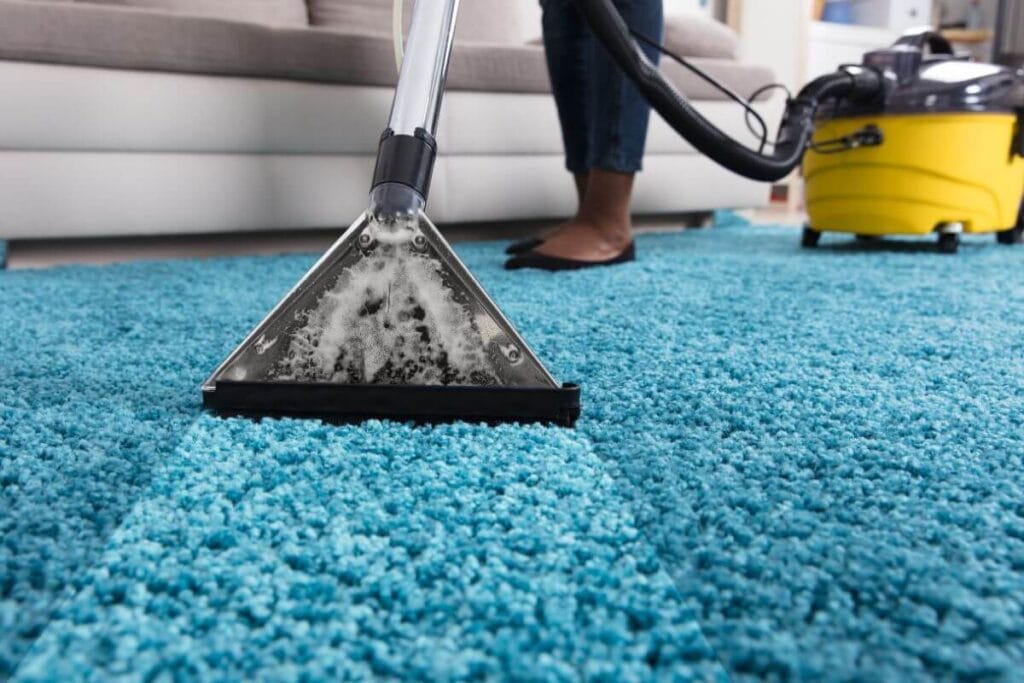
Carpet dries by evaporation: moisture leaves the fibers and moves into the surrounding air. The more water vapor that air is already holding, the more slowly it accepts new moisture. That’s the whole story — humid air is simply a slower sponge.
What follows from that is important: the amount of water left in the carpet at the end of the cleaning matters far more than the weather outside. A carpet holding very little water will dry acceptably even on a muggy August afternoon. A carpet that was over-wetted will stay damp for a day even in dry October air. Humidity amplifies the consequences of the cleaning method — it doesn’t create them. Where damp carpet turns into a mold concern, and what cleaning does and does not do about it, is covered in damp carpet and mold risks in Maryland homes.
Where Slow Drying Actually Comes From
When a Maryland homeowner tells us a previous cleaning left their carpet wet “all weekend,” the culprit is almost always one of three things:
- Weak extraction. Rental machines and underpowered portable units spray water into the carpet effectively but lack the vacuum lift to pull it back out. Water left in the padding has nowhere to go but slowly up through the pile.
- Over-wetting. Flooding the carpet to compensate for weak chemistry or a single fast pass leaves far more water behind than any amount of airflow can quickly clear.
- No drying plan. Walking out the door the moment the last pass is done, with no air movement started, wastes the hours when evaporation matters most.
Notice that none of those are caused by Maryland’s climate. They’re method problems that Maryland’s climate punishes harder than a dry climate would.
How We Get to Dry-in-2–4-Hours, Even in August
Our standard on every job — the claim you’ll find on all our location pages, because it’s the standard we actually hold — is carpet dry to the touch in 2–4 hours. Three parts of the process make that possible in Maryland’s climate:
- Truck-mounted vacuum power. Our truck-mounted systems inject hot water and immediately recover it with vacuum lift no rental unit approaches. Most of the water we put into the carpet leaves the carpet in the same pass.
- Dry strokes. After the cleaning passes, technicians run additional vacuum-only passes over the carpet, pulling out remaining moisture without adding any.
- Positioned air movers. Before we leave, air movers are set to keep air moving across the damp carpet — because moving air, even humid air, evaporates water far faster than still air.
The chemistry side matters too: our Green Seal GS-37 certified pre-spray and rinse are formulated to flush out without leaving sticky residue, so there’s nothing left in the pile holding moisture — or attracting the next round of soil. For the full picture of the method, see our complete guide to hot water extraction.
What You Can Do to Help It Along
- Run the AC. Air conditioning is dehumidification — in a Maryland summer it helps more than open windows, which let humid outdoor air in.
- Leave ceiling fans on in cleaned rooms for the first few hours.
- Stay off it while damp — foot traffic on damp pile flattens it and can re-introduce soil. Two hours of patience protects the result.
- Winter works too. Cold-season indoor air is dry; carpet cleaned in January often dries at the fast end of the range. There’s no wrong season for cleaning in Maryland — just different drying profiles.
Frequently Asked Questions
How long does carpet take to dry after professional cleaning in Maryland?
With truck-mounted extraction, dry strokes, and positioned air movers, our jobs are dry to the touch in 2–4 hours — including in summer humidity.
Should I avoid getting carpets cleaned in a humid Maryland summer?
No. Humidity punishes weak extraction, not cleaning itself. With proper equipment and a drying plan, summer cleanings dry within the normal window — and summer is when carpets need it most, with pollen and tracked-in outdoor grime at their peak.
Can damp carpet cause mold in a humid house?
Carpet that stays damp for days can — which is exactly why extraction quality and drying airflow matter. The EPA advises drying wet materials within 24–48 hours to prevent mold growth; carpet that is dry to the touch in 2–4 hours is well inside that window.
Does running the heat or AC after cleaning damage the carpet?
No — conditioned air helps. AC removes humidity in summer; heated indoor air in winter is naturally dry. Either way, moving conditioned air is the fastest safe path to fully dry carpet.
Ready for a real answer on your carpet cleaning?
Call (410) 819-2223, or send the details and a written price comes back the same working day.