
Baltimore’s rowhomes are unlike anything else we clean. Long, narrow floor plans. Steep staircases, often two flights. Carpet running through hallways barely three feet wide. A basement level that sits below grade and holds moisture half the year. After 20 years of cleaning carpets across Maryland — a large share of them in rowhomes from Canton to Pigtown — we’ve learned that the standard “3 rooms and a hallway” playbook doesn’t quite fit these houses, and neither does the standard advice about carpet care.
This guide covers what actually matters for carpet in a Baltimore rowhome: how the layout concentrates wear, why the stairs deserve more attention than any room, what the basement level does to carpet over time, and what a professional cleaning visit looks like when the truck is parked on a narrow street.
Why Rowhome Carpet Wears Differently
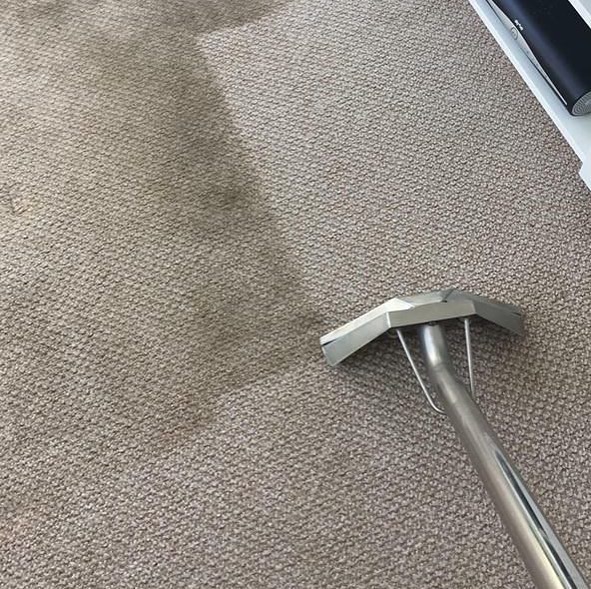
In a detached suburban home, foot traffic spreads out — multiple doorways, wide rooms, more than one path to the kitchen. A rowhome funnels everything through one narrow line: front door, hallway, stairs, back of the house. That single traffic lane takes nearly every footstep the house sees, every day.
The result is a wear pattern we see constantly in Baltimore: a sharply defined dark lane down the center of the hall and up the stair treads, while carpet a foot to either side still looks nearly new. Vacuuming alone can’t reverse it, because the discoloration isn’t just surface dirt — it’s compacted soil ground into the pile by concentrated foot traffic, bonded by the oils that come with it. That takes hot water extraction to flush out, and it’s why traffic lanes are the first thing our technicians assess on a rowhome job.
The Stairs Are the Hardest-Working Carpet in the House
Rowhome staircases are steep, narrow, and — in a three-story home — used dozens of times a day. Each step concentrates the full weight of a footfall on the nose of the tread, which is exactly where the carpet folds over the stair edge and where the pile is most exposed. Stair carpet in a rowhome typically shows wear years before the bedroom carpet does.
Stairs also take longer to clean properly than any equivalent area of flat floor. Each tread gets worked individually — pre-spray, agitation, extraction — which is why stairs are priced per flight rather than folded into a room count. Be wary of any quote that includes stairs “free”: either the treads are getting a quick once-over, or the cost is hiding somewhere else. Our truck-mounted system reaches a third story without a problem, so upper flights aren’t a limitation.
Basement Carpet: The Moisture Problem Below Grade
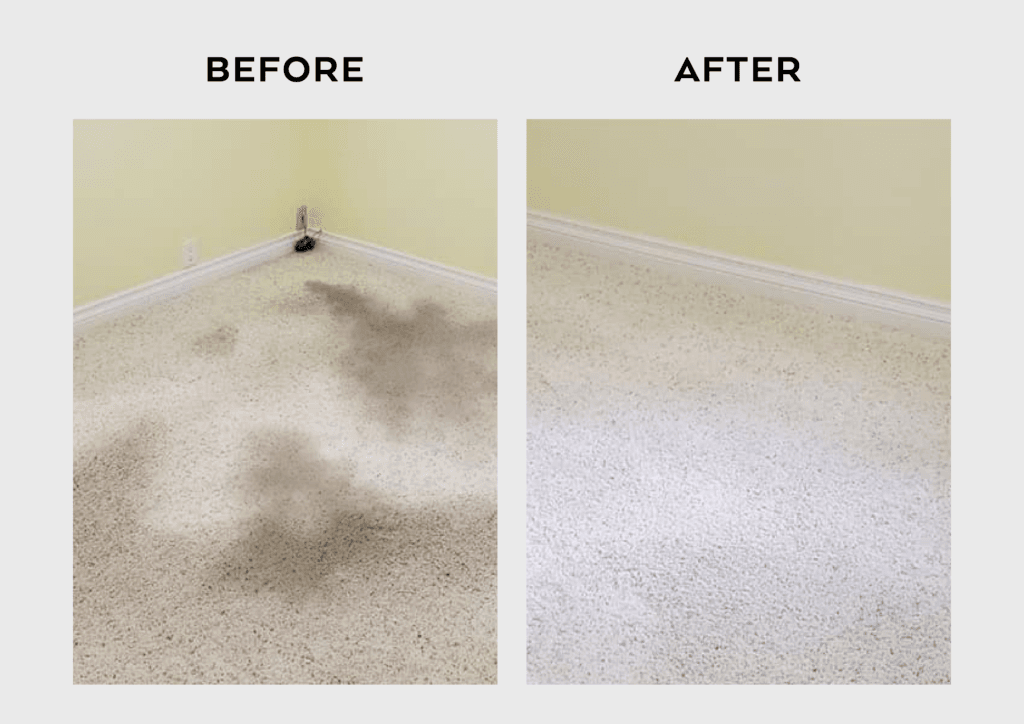
Many Baltimore rowhomes have a finished or semi-finished basement level, and carpet down there lives a harder life than carpet anywhere else in the house. Below-grade rooms run cooler than the rest of the home, which means humid summer air condenses more readily, and moisture that gets into carpet — from humidity, a spill, or a damp slab — evaporates more slowly.
Over time, that moisture cycle shows up as a musty smell that never quite airs out. The honest answer, which we give homeowners regularly, is that sometimes the fix isn’t a cleaning — if padding has held moisture long enough to break down, we’ll recommend pad replacement rather than sell you a cleaning that can’t solve the problem. That honest-assessment approach is central to how we work: we’d rather tell you what the carpet actually needs. For basement carpet that’s structurally fine but musty, extraction cleaning with a controlled drying pass — air movers positioned before we leave, carpet dry in 2–4 hours — removes the trapped soil and moisture load without adding to it. We’ve covered the below-grade problem in more depth in our guide to preventing basement carpet mold.
What a Cleaning Visit Looks Like on a Narrow Street
A fair question Baltimore homeowners ask: how does a truck-mounted system work on a block with parallel parking and no driveway? The answer is hose length. Our trucks (running Diamond Products GTXR+ or TCS Chief II systems at 220°F) carry enough hose to park at the curb — or around the corner if needed — and still reach the third floor. The truck stays outside; only the hoses and the technician come through your home, with corner guards protecting the walls and trim along the hose path.
The process inside is the same one we run on every job: pre-vacuum, Green Seal GS-37 certified pre-spray (an independently verified eco-label — it matters in a narrow home where the whole family walks the same carpet), counter-rotating brush agitation, hot water extraction, and positioned air movers. Xtreme Cleans is family-owned, has been doing this since 2014, and carries a $4 million ERIE insurance policy — certificate available before we start, which matters when our hoses are running through your front door.
Practical Care Between Cleanings
- Runner or no runner: a washable runner down the main hallway lane absorbs the traffic that would otherwise grind into the wall-to-wall carpet — the single most effective thing a rowhome owner can do.
- Vacuum the lane, not just the room: twice a week down the center traffic path matters more than a monthly pass over the whole floor.
- Entry mats at both doors: rowhomes have a front and rear entry, and the rear (often off an alley) tracks in more grit than the front.
- Watch the basement humidity: a dehumidifier in the finished basement protects the carpet as much as any cleaning schedule.
- Annual professional cleaning: with traffic this concentrated, every 9–12 months keeps the lane from setting permanently.
Frequently Asked Questions
Can a truck-mounted system reach a third-floor bedroom in a rowhome?
Yes — our hose runs reach a third story from street parking. Upper floors are not a limitation and don’t cost extra to access.
Why does my rowhome hallway look dirty again so soon after DIY cleaning?
Rental machines clean the surface pile but can’t extract the compacted soil at the base of a concentrated traffic lane — and any detergent residue they leave behind attracts new soil to exactly that lane. Truck-mounted extraction removes both.
How long will the carpet stay damp in a rowhome with limited airflow?
Dry to the touch in 2–4 hours. We position air movers before we leave, which matters most in narrow floor plans with fewer windows.
Is carpet even a good idea in a rowhome basement?
It can be, with humidity control. If we inspect yours and the padding shows long-term moisture damage, we’ll tell you pad replacement — or a hard-surface floor — is the better investment. We don’t sell cleanings that won’t fix the problem.
For the broader Baltimore picture — humidity, hard water, and what they mean for your carpet — read our honest guide to carpet cleaning in Baltimore. And when you’re ready for a visit, our crews are in Baltimore, Dundalk, and Essex most weeks.
Ready for a real answer on your carpet cleaning?
Text a photo of the problem to (410) 819-2223 and we’ll reply in minutes — or call for same-week availability across Maryland.
