
You pulled back the covers at 10 PM expecting a peaceful night’s sleep. Instead, you found a damp, warm patch — the unmistakable sign that someone in the household (or the dog) had an accident. Maybe your toddler didn’t quite make it, or a loud storm startled your pet. Now there’s urine in the mattress, the smell is creeping in, moisture is lingering, and you’re not sure whether you can fix this yourself or you’re facing a full replacement.
Here’s the good news: you can rescue that mattress. With the right method, timing, and care — especially in Maryland’s humid climate — you can lift the yellow stain, eliminate the odor, and make the bed safe again. Xtreme Cleans has cleaned upholstery and mattresses for Maryland families for 20 years, and we’ve seen how much fast response and the correct technique matter. This guide covers exactly what to do in the first 10 minutes, a proven step-by-step for fresh and old stains, pet-specific steps, drying protocols that prevent mold, and when it’s smart to call in a pro.
Why Urine Is So Hard to Remove from a Mattress
Urine isn’t just water. It contains proteins, uric salts, ammonia, and bacteria — all of which embed into mattress materials, especially foam and memory foam. Once those salts crystallize, they become an ongoing odor source that re-activates with humidity. And if the mattress stays damp, especially in Maryland’s humid environment, you risk mildew, bacterial growth, or mold inside the mattress core. Treat only the surface and you’ll leave the smell — and a possible health risk — underneath. That’s why timing and method matter as much as the cleaner you choose.
What to Do Immediately (Fresh Urine)
Step 1 — Blot, don’t scrub. Press an absorbent towel firmly over the wet area. Do not rub — rubbing pushes moisture deeper and spreads the stain. Keep pressing (swap in dry towels) for 3–5 minutes, until the towel shows minimal color transfer.
Step 2 — Extract as much moisture as possible. If you have a wet-dry vacuum or a household extractor, fit the upholstery tool and gently suction the area for 1–2 minutes. This matters most on foam and hybrid mattresses, where liquid seeps between layers.
Step 3 — Apply a mattress-safe cleaning solution. Use a neutral-pH or oxygen-based cleaner made for upholstery and mattresses. Apply lightly so the surface is damp, not soaked, then let it dwell 10–15 minutes. This begins breaking down the proteins and uric salts before they set.
Step 4 — Neutralize the odor with an enzyme cleaner. Reach for an enzyme-based (or oxygen-based) neutralizer rather than a vinegar-and-baking-soda mix — more on why below. One rule the pros follow: use at least as much enzyme cleaner as there was urine, so it reaches as deep as the liquid did. Let it dwell about 20 minutes; the enzymes must stay wet to keep working and break down the odor-causing crystals.
Step 5 — Light rinse and extraction. After the dwell time, extract again with the wet-dry vac or press with dry towels to pull out residue. Don’t over-wet, especially on memory foam.
Step 6 — Drying is the most important part. Set up a strong fan or open windows if the weather is dry. Because Maryland summers are humid, running a dehumidifier or your A/C alongside the fan pulls moisture out of the room and speeds things up. Use the drying guide below, and only remake the bed once the mattress is cool and dry to the touch.
| Mattress type | Airflow drying time | Notes |
| Innerspring | 4–6 hours | Dries fastest; a single fan is usually enough. |
| Hybrid or latex | 6–10 hours | Add a dehumidifier in humid weather. |
| Memory foam | 12–24 hours | Ensure air circulates around the whole mattress; unzip the cover if possible. |
How to Clean Dried or Old Urine Stains
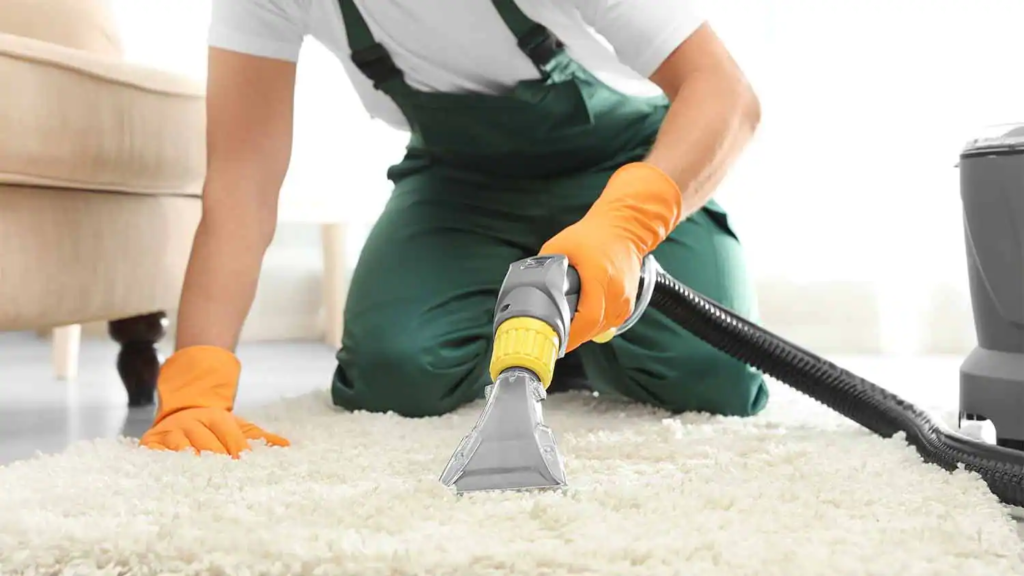
Old urine is a tougher job: the uric acid crystals are set, the odor may already be radiating, and moisture has often penetrated deep into the layers. It’s longer, but still doable.
1. Lightly rehydrate the stain. Mist a small amount of cleaner onto the stain — enough to dampen, not soak — and let it dwell 10 minutes.
2. Apply an enzyme treatment with an extended dwell. Apply a generous amount of neutralizer and cover the area with plastic wrap for 30–60 minutes. Keeping it moist lets the enzymes penetrate deep instead of drying on the surface.
3. Extract and blot. Remove the wrap, pull the liquid out with a wet-dry vac, then press with dry towels.
4. Repeat if needed. If odor or staining remains, wait 24 hours and repeat the enzyme step. Set-in stains often take more than one pass — for a mattress that’s been soiled for months, expect two or three enzyme cycles over a couple of days before the smell is fully gone.
5. Dry thoroughly. Because the mattress has been wet repeatedly, drying is critical: run two fans for cross-flow, keep the room cool if you can, and run a dehumidifier overnight. On foam mattresses, unzip the cover and expose it to the airflow.
What About Baking Soda, Vinegar, and Peroxide?
These kitchen staples show up in almost every mattress guide, so here’s the honest version. Baking soda does help — but only after the mattress is dry, as a finishing step to absorb residual surface odor and moisture. Sprinkle it on, leave it several hours, then vacuum. What it doesn’t do is break down the uric salts causing the deep odor; only an enzyme cleaner does that. Vinegar can knock back fresh surface smell, but as a main treatment it’s superficial and leaves its own odor. And skip hydrogen peroxide on memory foam, latex, or polyfoam — it can damage and discolor the foam. Enzymes first, baking soda last, peroxide not at all on foam.
Pet Urine on a Mattress
Pets — cats especially — bring stronger odor challenges. Cat urine carries higher concentrations of uric salts and volatile compounds, and dogs may mark the same spot repeatedly.
- Use a black light in a darkened room to find every affected spot — small ones are easy to miss.
- Treat with the enzyme approach above. For repeat dog-marking, run the enzyme session twice, 24 hours apart.
- Once it’s clean and dry, add a breathable waterproof protector to stop future seep-through and make cleanup easier next time.
When DIY Won’t Be Enough
Even a well-executed DIY job has limits. Consider calling a professional when:
- The core has been soaked and liquid penetrated deep into the layers.
- Odor persists after 48–72 hours of drying and repeat treatment.
- Someone in the home has allergies, asthma, or odor sensitivity.
- You suspect mold — a musty smell, visible spots, or a history of long-term moisture.
In those cases, a professional upholstery and mattress cleaning service can reach deeper than a household vacuum, with stronger extraction and full sanitation — and get the mattress dry faster so the moisture doesn’t come back as mold.
Prevention Tips for Maryland Households
Prevention beats cleanup every time. For Maryland homes — where humidity, pets, kids, and older HVAC systems all play a role — these habits help:
- Use a breathable waterproof mattress protector (not heavy vinyl) consistently.
- In humid months (May–September), run a dehumidifier or keep the A/C moderate to hold indoor humidity below 50–55%.
- Potty-training a toddler? Limit drinks after 8 PM and keep a night-light and nearby potty handy.
- For pets, reinforce outdoor habits, use dedicated bedding, and address marking behavior promptly.
- Give the mattress 30 minutes of open-air ventilation after any cleaning before you remake the bed.
Is Mattress Urine Harmful?
According to the Maryland Department of Health, persistent moisture inside a mattress can become a breeding ground for bacteria and dust mites, which may trigger asthma or allergic reactions. Urine-derived moisture sitting in the core raises those risks whenever drying is incomplete — so, especially in older homes or low-airflow rooms, drying fully is every bit as important as the cleaning itself.
Final Thoughts
Finding urine in a mattress feels like a late-night crisis, but it’s fixable. Act quickly, use the right cleaner, and give it proper drying time — critical in Maryland’s humidity — and you’ll lift the stain, kill the odor, and restore your sleep surface. Fresh accidents are often handled in one evening; older or pet-related stains take longer but stay manageable. If the odor lingers despite your best effort, a professional cleaning service can take it from there with deep extraction and full sanitation. We’ve helped many Maryland families turn a mess into fresh, safe sleep — and you can too.
Our crews handle carpet cleaning in Upper Marlboro, along with jobs in Severna Park and Frederick, most weeks.
Frequently Asked Questions
Does baking soda get pee smell out of a mattress?
Baking soda helps as a finishing step — sprinkled on the dry mattress, left a few hours, then vacuumed, it absorbs residual surface odor and moisture. It does not break down the uric salts causing deep odor, though; only an enzyme cleaner does that. Use enzymes first, baking soda last.
Will a urine stain ruin my mattress?
Usually not, if you act reasonably soon. Blot, treat with an enzyme cleaner, extract, and dry fully and most mattresses recover. The real risk is incomplete drying, which can lead to mildew or mold inside the core — so drying matters as much as cleaning.
How long does a mattress take to dry after cleaning?
With good airflow, an innerspring mattress dries in about 4–6 hours, a hybrid or latex in 6–10, and memory foam in 12–24. Maryland humidity slows all of these, so a dehumidifier or A/C running alongside a fan makes a real difference.
Can I use hydrogen peroxide on a memory foam mattress?
No — hydrogen peroxide can damage and discolor memory foam, latex, and polyfoam. Stick to a mattress-safe, neutral-pH or enzyme-based cleaner on foam mattresses.
Ready for a real answer on your carpet cleaning?
Text a photo of the problem to (410) 819-2223 and we’ll reply in minutes — or call for same-week availability across Maryland.
